Efficiency and Performance
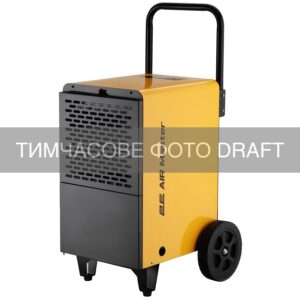
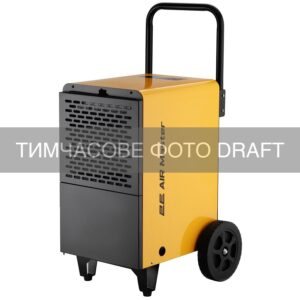
The 2E Air Master 50 dehumidifier is designed to remove excess moisture from the air in rooms up to 140 m². The unit operates in a temperature range of +5 to +35 °C with a moisture removal capacity of up to 50 liters per day. Condensate is drained into a drain (sewer). A wide range of air humidity control can be set between 10% and 95% relative humidity, which is particularly important for product storage in warehouses or for carrying out certain technological processes.
Well-thought-out design
The dehumidifier’s robust steel housing with an anti-corrosion coating ensures its strength and durability, while its high airtightness protects against water and dust entering the dehumidifier mechanism.
Convenient control
The device is equipped with a control panel that indicates normal and emergency modes. The air humidity control range (from 10 to 95%) can be adjusted using the buttons, and the readings will be displayed on the LCD screen. After that, the display switches to showing the current humidity level. For convenience, an on/off timer is provided. Operating time can be programmed for up to 24 hours. In the event of a sudden power outage, the settings are saved. After a power outage, the compressor restarts with a 3-minute delay. Protection against frequent starts is also provided.
Eco-Friendliness and Safety
The 2E Air Master 50 dehumidifier is completely safe, as it uses the highly efficient and eco-friendly R290 refrigerant. This refrigerant is considered one of the best and is widely used in modern refrigeration equipment.
Easy Maintenance
The dehumidifier is easy to use, features an easy-to-clean filter, and has an automatic defrost function.
Portable design
The unit is equipped with large wheels and features a convenient steel handle. This makes it easy to transport or quickly move around on construction sites or in manufacturing environments.
Applications
This model is useful for dehumidifying storage areas and damp basements, during flood cleanup, for precise climate control in storage facilities, warehouses, and manufacturing environments, as well as in construction (e.g., for drying screed) and for drying wooden or plaster products.